Why Dont Health Savings Accounts Earn Interest

A health savings account can feel like it should work just like a regular savings account. Money sits there. The word “savings” is right in the name. So why does the balance often earn little interest, or none that you can see?
The short answer is that many HSAs do earn interest, but the rate on the cash portion can be extremely low. In some accounts, fees, balance tiers, or the provider’s setup can make the interest look like nothing at all.
An HSA is first a tax-advantaged medical account. It is not always designed to be a high-yield savings account. That difference explains most of the confusion.
This article is for general information only and is not financial, tax, or medical advice.

The short answer is that HSAs usually have a cash side
Most HSA providers split the account into two parts:
Cash balance
This is the money available for medical expenses, often accessible by debit card or reimbursement.
Investment balance
This is money placed into mutual funds or other investment options, if the HSA provider offers them and if the account holder chooses to invest.
The cash balance may earn interest, but often at a low rate. The investment balance does not earn “interest” in the same way. It may rise or fall based on the investments chosen.
That is why one person may say, “My HSA earns nothing,” while another says, “My HSA grows over time.” They may be using the same type of account in very different ways.
If your HSA has only a small amount of cash in it, and the interest rate is tiny, the monthly interest may be just a few cents. Some providers credit interest monthly. Others show it quarterly. Some accounts may not show visible interest until the balance reaches a required level.
Why the interest rate can be so low
HSA cash rates vary by provider. Some pay nothing on very small balances. Some pay a low rate until you reach a higher balance tier. A few offer more competitive cash rates, but they are not the norm.
There are several reasons for this.
The provider controls the cash rate
HSAs are usually managed by banks, credit unions, insurance-linked administrators, brokerage firms, or specialized HSA custodians. The provider decides what rate to pay on the cash portion.
That rate may be far below what you see on a high-yield online savings account. The provider may keep a larger share of what it earns on pooled deposits. It may also use low rates to cover account servicing costs.
The result is simple: your HSA cash may sit in a safe, accessible account, but it may not be a strong interest earner.
Some HSAs have balance tiers
Many HSAs use tiered interest. For example, the account might pay one rate for balances under a certain amount and a slightly higher rate above that level.
The lowest tier is often where many people stay, especially if they use the HSA often for prescriptions, doctor visits, dental care, or other qualified medical expenses.
If the account pays interest only after a certain balance, or pays a higher rate only after several thousand dollars, a smaller HSA may appear not to earn interest at all.
Fees can erase small interest amounts
Some HSAs charge monthly maintenance fees, paper statement fees, transfer fees, closure fees, investment fees, or other account charges.
If your account earns $0.15 in interest but charges $2.50 in monthly fees, the account will shrink unless new contributions cover the difference. That can make it feel like the account does not earn interest, even if it technically does.
Employer-sponsored HSAs may have some fees covered while you remain with that employer. After you leave the job, the fee structure can change. That is a common reason people notice their old HSA balance slowly going down.
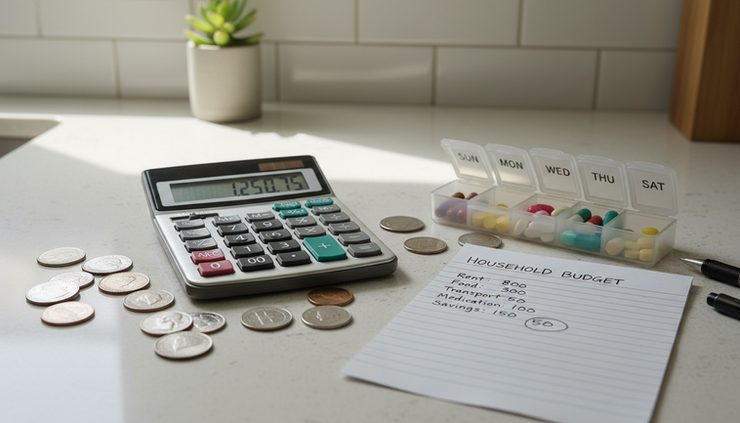
The word savings can be misleading
The term “health savings account” comes from its tax purpose, not from a promise of high interest.
An HSA lets eligible people set aside money for qualified medical expenses. In general, the account has three major tax benefits:
Contributions may be tax-deductible or made pre-tax through payroll.
Growth inside the account can be tax-free.
Withdrawals for qualified medical expenses can be tax-free.
That tax treatment is the real value of an HSA. Interest is only one possible way the money can grow.
This is different from a regular savings account, where the main purpose is usually to earn interest while keeping money liquid and safe. An HSA has a narrower purpose. It must follow IRS rules. It also needs payment features, records, tax forms, and medical expense tracking.
That extra administration can affect the account design and cost.
The cash is often kept liquid for medical bills
HSA cash is meant to be available when a medical bill arrives. That matters.
If the provider placed all HSA cash into longer-term products to chase higher yields, account holders might not be able to access money quickly enough. Medical expenses can be sudden. People may need to pay for an urgent care visit, medication, lab work, or a deductible charge.
So HSA providers often keep the cash portion in a sweep account or deposit account that focuses on liquidity first. Liquidity usually comes with lower yield.
That does not mean the cash rate must be poor. It only explains why many HSAs do not behave like high-yield savings accounts. They are built around access, records, compliance, and payments.
Some employers pick convenience over high interest
Many people get an HSA through an employer. The employer may choose the HSA provider that works best with its health plan, payroll system, benefits platform, or employee onboarding process.
That provider may not offer the best interest rate.
This can create a tradeoff. The employer-selected HSA might make payroll contributions easy and allow employer contributions to land without extra steps. But the same account might have low interest, limited investment options, or fees after employment ends.
The account still belongs to the employee, not the employer. In many cases, HSA owners can transfer funds to another HSA provider. Some people keep payroll contributions going into the employer-linked HSA, then periodically transfer extra money to a lower-fee or investment-friendly HSA.
Before doing that, check for transfer fees, minimum balances, and any employer rules about contributions.
Your HSA might need an investment step to grow
If an HSA offers investments, cash does not usually move into investments automatically. The account holder often has to choose that option.
Some HSAs require a minimum cash balance before investment is allowed. For example, the provider may require a certain amount to remain in cash before anything above that can be invested. The exact rule varies.
This is one of the biggest reasons people think their HSA is not growing. They contribute money, assume it will earn a meaningful return, then later find out it has been sitting in a low-rate cash account the whole time.
Investment growth is different from interest. It can be higher over long periods, but it also carries risk. Investments can lose value, especially over short periods. Money needed soon for medical bills may not belong in investments.
A common approach is to keep enough HSA cash for expected near-term medical costs, then consider investing extra funds that are not likely to be needed soon. The right amount depends on health needs, income stability, deductible size, and comfort with risk.

How to check whether your HSA earns interest
The fastest way to find out is to look at your HSA’s rate and fee schedule. Do not rely only on the account dashboard. Dashboards often show balances, transactions, and debit card activity, but not the full rate structure.
Look for these items:
The interest rate or annual percentage yield on cash
Balance tiers for interest
Monthly maintenance fees
Investment account fees
Minimum cash balance required before investing
Transfer or closure fees
Whether interest posts monthly, quarterly, or annually
Then check your transaction history. Search for terms like `interest`, `dividend`, `earnings`, or `credit`. Different providers label these entries in different ways.
If you still cannot find the answer, contact the HSA provider and ask direct questions:
Does the cash balance earn interest?
What is the current annual percentage yield?
Is there a minimum balance to earn interest?
Are fees deducted from my account?
Can I invest part of the balance?
Is there a required cash threshold before investing?
These questions can save you from guessing.
What to do if your HSA earns little or nothing
A low interest rate does not always mean you should close or move the account. Start with the purpose of the money.
If you use the HSA often
If you regularly use the account for current medical expenses, a low cash rate may be less of a problem. The money is not sitting long enough to earn much anyway.
In that case, the most useful features may be:
Easy payroll contributions
A reliable debit card
Simple reimbursement tools
Low or no monthly fees
Clear tax forms
Good customer support
A higher interest rate is nice, but it may not be the main factor.
If you build the HSA for the future
If you rarely spend from the account and want to save for future medical costs, interest and investment options matter more.
In that case, compare HSA providers based on:
Low account fees
Competitive cash rates
Strong investment choices
No unnecessary investment thresholds
Easy transfers
Clear statements
Good online access
A long-term HSA strategy often depends less on cash interest and more on low costs, steady contributions, and sensible investing.
If fees are eating the balance
Fees deserve quick attention. A small HSA can be hurt badly by a monthly maintenance charge.
If you have an old HSA from a former employer, review it closely. Former employees sometimes lose employer-paid fee benefits. If the account now charges monthly fees and pays little interest, transferring to another HSA provider may make sense.
Use a trustee-to-trustee transfer when possible. That means the funds move directly from one HSA custodian to another. It can reduce the risk of tax complications compared with receiving the money yourself and trying to redeposit it within the allowed time.
Do not confuse HSA interest with tax savings
Even when the interest rate is low, an HSA can still be valuable because of its tax treatment.
For many people, the biggest benefit comes from contributing pre-tax dollars through payroll. If the employer allows payroll deductions, those contributions may avoid federal income tax and, in many cases, payroll taxes. State tax treatment can vary.
Then, if the money is used for qualified medical expenses, withdrawals can be tax-free.
That combination can be more valuable than a slightly higher interest rate in a regular savings account. A regular savings account may pay more interest, but that interest is usually taxable.
This does not mean every HSA is good. A high-fee HSA with poor service can still be a bad deal. But the value of an HSA is not measured by interest alone.

When an HSA may show zero interest
There are a few situations where your statement may show no interest at all:
The cash rate is currently 0.00%.
Your balance is below the interest-earning tier.
Interest posts less often than you expect.
Fees offset the interest before you notice it.
The account holds money in investments instead of interest-bearing cash.
The provider labels interest under another transaction name.
The account was recently opened and has not completed a full posting cycle.
If the statement truly shows 0.00% APY on cash, the HSA cash is not earning interest at that time. That does not break HSA rules. The IRS does not require an HSA provider to pay a meaningful interest rate.
A simple way to think about your HSA
An HSA has three possible jobs:
Job | Best fit | What to watch |
Pay current medical bills | Keep money in cash | Fees, debit card access, reimbursement tools |
Build a medical emergency cushion | Keep a stable cash balance | Interest rate, minimums, monthly charges |
Save for future healthcare costs | Consider investing extra funds | Investment risk, fees, time horizon |
The right setup may use all three. You might keep enough in cash for near-term expenses, avoid fees where possible, and invest money that you do not expect to use soon.
That is often more useful than asking only whether the HSA earns interest.
The takeaway
Health savings accounts often appear not to earn interest because the cash rate is low, the balance is too small for interest tiers, fees offset the earnings, or the money has not been moved into investments. Some HSAs truly pay 0.00% on cash, but many simply pay so little that it is easy to miss.
If your HSA is not growing, check the rate schedule, fee schedule, cash minimums, and investment settings. Then decide what the account is supposed to do for you.
For short-term medical bills, easy access and low fees may matter most. For long-term savings, a low-cost HSA with solid investment options may matter more than the cash interest rate. The best HSA is not always the one with the highest advertised yield. It is the one that fits how you actually use the money.



Comments